

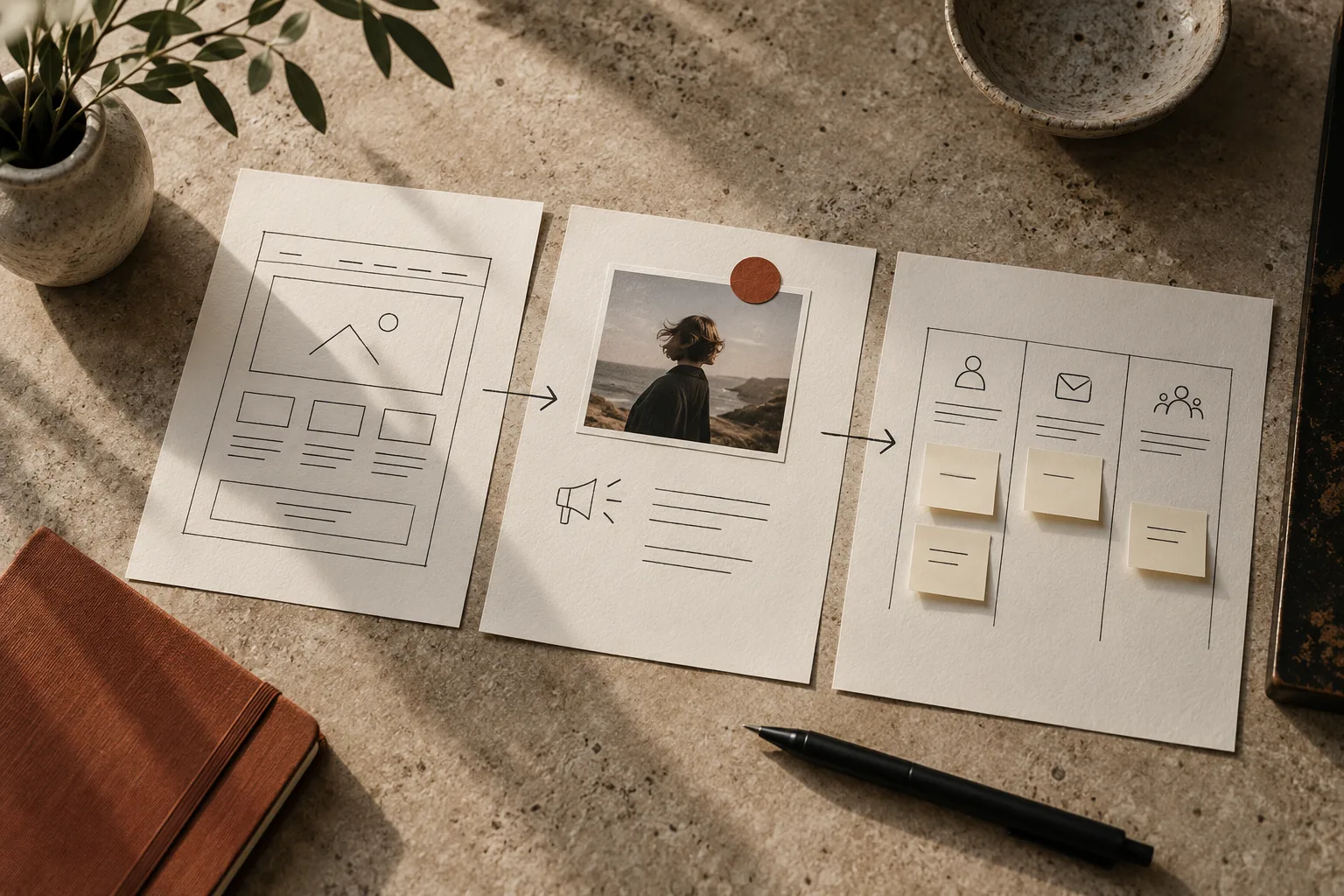
The click is only the beginning
My route into building products started with marketing. Working with Google Ads accounts made me interested in what happened after someone clicked: the page they reached, the information they found and the next step they were asked to take.
That interest became part of the reason for founding Performoon. Today, alongside client work, I build property lead-generation websites and the tools around them. I create the website, work on the ads and build systems for handling the enquiries. It lets me think about one connected process instead of treating each piece as a separate handover.
This is a description of how I approach the work, not a claim that one person should do every job. Good collaboration can achieve the same thing. What matters is that the people responsible for the different parts agree on what a useful enquiry looks like.
Start with a real decision
Before choosing a layout or writing an ad, I want to understand what a visitor needs to decide. Someone looking at property abroad might need to understand an area, compare types of homes or speak with a person who knows the local market. Those are different tasks. A single generic contact button does not explain which one comes next.
For a lead-generation website, I work backwards from the conversation the business wants to have. The useful questions are simple:
- Who is this page for?
- What does the visitor need to understand before getting in touch?
- What happens after they submit an enquiry?
- Who will respond, and what information will they need?
The answers should shape the page and its form. They should also inform the advertising. A campaign promise and a landing page should describe the same offer in language the visitor recognises.
Make the handover visible
A submitted form is not the end of the journey. It is the beginning of someone else's work. If an enquiry disappears into an inbox without a clear next action, a well-designed page has only solved part of the problem.
This is where a CRM becomes useful. In my property work, MarciCRM brings enquiries, conversations, appointments and follow-up together. The purpose is practical: knowing what has arrived, what has already happened and what needs attention next.
The exact fields and stages should follow the business. A property consultation is different from a restaurant order or an online shop checkout. Copying the same workflow into all three would hide the differences that matter.
Measure more than the form submission
A contact form submission is a useful signal, but it does not tell the whole story. For a service or property business, I would also want to understand whether the enquiry was relevant, whether a conversation took place and whether it progressed to an agreed next step.
That does not mean collecting every possible detail. It means agreeing on a few events that correspond to real work, then using the same definitions across the website, advertising and CRM. A demo request, a property consultation and a completed order should not all be described as the same kind of success.
Where figures are shared publicly, the evidence and its limits matter too. The illustrative dashboards in this portfolio use clearly labelled sample data. They show a way of presenting performance; they are not published client analytics.
Build a shorter feedback loop
When I work on the product and its marketing together, questions can travel in both directions. A repeated question from an enquiry can become clearer page copy. A confusing step on the website can change the campaign destination. A missing detail in the CRM can lead to a more useful form field.
That is the part of the work I enjoy: seeing an idea become something people actually use, then improving the connections around it. The website, the advertising and the follow-up each have a job. The best result comes when those jobs make sense together.